GOING GREEN
Continued upskilling and investment is required if the industry is to deliver more low carbon solutions for the public and private sector, writes Angelyn Rowan and Patrick Kane
As part of Ireland’s Climate Action Plan and commitments to the Paris Accord and the UN’s 2030 Agenda for Sustainable Development, the Government published the Green Public Procurement Strategy and Action Plan on 4 April 2024. The GPP Strategy is intended to use public procurement as a means of creating and supporting a market that can deliver more sustainable/low carbon solutions for the public and private sector alike.
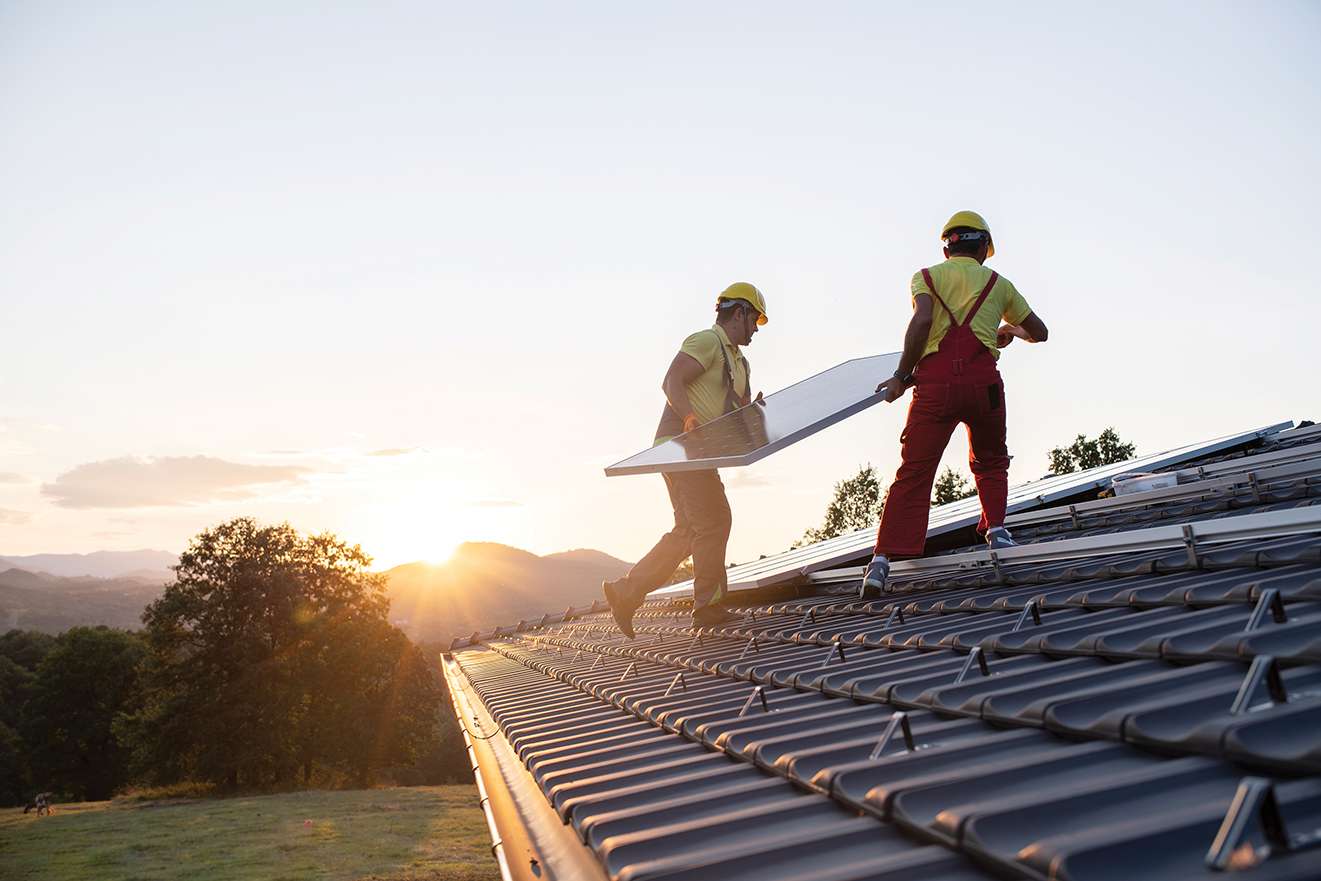
The Climate Action Plan sets an emission reduction target of 51% for the public sector by 2030. The GPP Strategy envisions a move towards sustainable and green procurement practices across the public sector to accomplish this goal. Replacing the 2012 ‘Green Tenders’ Public Procurement policy, the GPP Strategy seeks to accelerate the adoption of recyclable and reusable products in the public sector, reduce greenhouse gas emissions and maximise energy efficiency. A primary focus is on the transition to a Circular Economy, which focuses on reusing, repairing and recycling to reduce both the consumption of resources and the creation of waste and pollution.
To achieve this, the GPP Strategy introduces and updates a number of green public procurement criteria to be included in all future public procurement arrangements, where possible, including minimum sustainability criteria. Further GPP criteria are to be developed by the Environmental Protection Agency (EPA) to complement their existing work. The GPP Strategy indicates that GPP Criteria can make up to 5% of the award criteria, rising to 10% or higher as considered appropriate and proportionate, but it is important to note that this is not compulsory. GPP Criteria not only consist of award criteria but also relate to selection criteria, technical specifications and contract performance conditions. From 2025 onward, all public bodies will be required to report and explain instances where they have not included GPP criteria in published tenders over the applicable national/EU thresholds where appropriate national GPP criteria are available.
GPP in Construction
Construction is a key focus of the GPP Strategy due to the industry’s substantial environmental impact. Buildings in the EU are responsible for 40% of total energy consumption and 36% of total greenhouse gas emissions. The built environment accounts for 11.1% of Ireland’s GHG emissions, with public buildings amounting to half of the public sector’s energy consumption. Given Ireland’s substantial public works programme and Project Ireland 2040, this represents a significant area of focus for the GPP Strategy.
The GPP Strategy and Climate Action Plan seeks to ensure that all new dwellings will be designed to Nearly Zero Energy Building standards by 2025, and by Zero Emission Building standards by 2030. The GPP Strategy also places significant focus on embodied carbon and the carbon footprint of buildings during both the construction phase and the operational phase. To achieve these goals, the GPP Strategy calls for the incorporation of environmental considerations, such as energy efficiency, whole life GHG emissions and low carbon materials into tender requirements. GPP criteria have been set for the design, construction, renovation, retrofitting, demolition and management of buildings across the public sector. The Capital Works Management Framework documents already include a requirement for the use of lifecycle costing for new projects and further GPP Criteria and requirements will be introduced by the end of 2025. Public bodies will also be required to specify “low carbon construction methods and low carbon cement material as far as practicable”.
The GPP Strategy notes that further GPP Criteria guidance will be provided by the EPA on the construction of buildings and this will align with the requirements of the recast Energy Performance of Buildings Directive.
Construction Materials and Products
Construction materials are a primary target for sustainability. The GPP Strategy has a target to decrease embodied carbon in construction materials produced and used in Ireland by at least 30% by 2030. Public bodies will now require low carbon construction methods and materials for public projects and evidence of sustainability in sourcing for timber materials.
The GPP Strategy is highly focused on the cement industry, which contributes to 5% of Ireland’s total GHG emissions. As a significant market participant in the industry, the Government has the opportunity to drive a shift towards low carbon, longer-life cement blends, as well as the use of alternative fuels and non-recyclable wastes in cement kilns. As part of the GPP Strategy, the Department of Enterprise and Trade has established the Cement and Construction Sector Decarbonisation Working Group. On 28 May 2024, DETE published a press release indicating that new guidance would be published based on the Working Group’s report on the design of public projects and the procurement of cement and concrete products. The press release indicates the Working Group Guidelines will take a phased approach to many of their requirements, as set out below.
The Working Group Guidelines require public bodies procuring projects commencing design from 1 September 2024 to use best carbon management design approaches in their procurement processes and to specify a minimum of 30% clinker replacement in concrete products procured or used in public projects. Public bodies are also required not to procure or use high-carbon CEM I cement products and to seek an Environmental Product Declaration when directly procuring cement or concrete products. These requirements may be waived where it is necessary and technically justified by a suitably qualified professional.


For public infrastructure projects commencing design from 1 September 2024, the Working Group Guidelines also require the procurement of a Whole Life-Cycle Greenhouse Gas Emissions assessment in accordance with SEAI guidance where their value exceeds €60 million. From 1 September 2025, this requirement will apply to residential public projects with a value of more than €60 million and non-residential public projects with a value of more than €10 million. These thresholds reduce to €30 million for residential public projects and €5 million for non-residential public projects (where project design commences on or after 1 June 2026) and €10 million for public infrastructure projects (where project design commences on or after 1 January 2026).
Finally, the GPP Strategy has included a construction sectoral target to have a minimum proportion of construction materials procured by public bodies under new contract arrangements to comprise of recycled materials. These sectoral targets are set to be published in the upcoming 2nd Whole of Government Circular Economy Strategy.
Conclusion
The GPP Strategy prescribes a number of targets and requirements for the Irish public sector over the next six years in furtherance of Ireland’s climate goals. This will require continued upskilling and investment in both the public and private sector as the phased targets become live. Public bodies will still need to ensure that any proposed GPP Criteria for tenders remain clearly linked to the subject matter of the contract and are proportionate to their requirements.
This article was written by Angelyn Rowan, Partner and Patrick Kane, Senior Associate at Philip Lee, www.philiplee.ie
_____________________________________________________
Michael McDonnell Managing Editor of Irish Construction Industry Magazine & Plan Magazine
Email: michael@irishconstruction.com WWW.MCDMEDIA.IE