IPI HIGHLIGHTS KEY STEPS TO COMPLETE TRANSFORMATION OF IRISH PLANNING SYSTEM
President of the Irish Planning Institute (IPI), Dr Conor Norton, has called for renewed urgency in the ongoing transformation of the planning system in Ireland to meet the major challenges in achieving sustainable development and climate action. Speaking in the context of the Housing for All and National Development Plan, Dr Norton highlighted the opportunity to rapidly rebalance the system and deliver a fit for purpose planning system for Ireland.
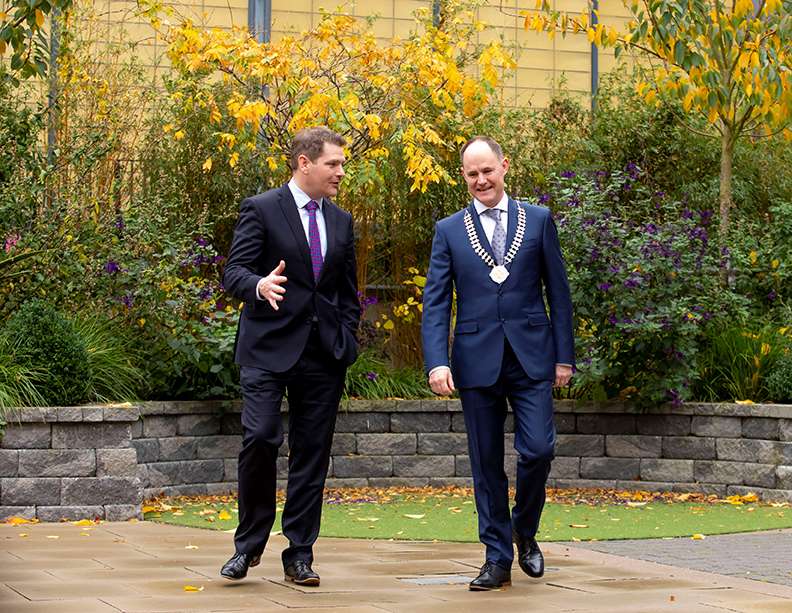
Speaking at the IPI Annual Planning Conference in Wexford, Dr Norton said: “Planning faces major challenges in the years ahead and planning and planners will need to be at the forefront of delivering on National and local commitments on climate action and sustainable development. The Irish planning system is undergoing a fundamental transformation as it seeks to meet these challenges. This transformation towards a more plan-led and place-based system is not yet complete, and we must act quickly to find a good balance between national, regional and local-level planning. The plan-led future is the only viable option for us and will come with many benefits for places and communities.”
He outlined the key areas that need to be addressed at the conference, with the Minister of State for Planning and Local Government, Peter Burke TD, department officials and delegates in attendance. Acknowledging the central role of planning in the delivery of housing and other key infrastructural projects, the following areas must be considered:
Establish and commit to the fundamentals of planning: The true purpose of planning is to act in the interests of the public and the common good, and to secure the objectives of sustainable development. There is plenty of scope within these to complete the transformation of the planning system and to help to restore public confidence in the system.
‘Connect the dots’ with a plan-led system: There is a need to complete the move to a plan-led planning system. While positive work has been done at national level, and with regional and metropolitan plans in place, the focus needs to shift to County and Local level.
Restoration of local level planning: With improved local level planning, the purpose and function of planning guidelines must be reconsidered. While there is no appetite to keep shifting the planning goalposts, sustainable place-making at local level must trump generic Planning Guidelines.
Consistency in decision making: There is need for consistency in decision-making and a rebalance of national and local level considerations, in addition to how vague high-level policy is translated into Local Authority and An Bord Pleanála planning decisions. While this is important planners, it is even more important for a ‘confused public’.
Regional planning: Ireland is almost unique in Europe as it still uses a two-tier government structure. In most countries regional planning provides the link between national and local level planning. National-level planning should focus on national spatial and planning policy, and can coordinate regional planning, and indeed avoid unnecessary involvement in local matters. Likewise, local planning can then focus on the business of placemaking and regeneration within the coordinating framework of regional planning, and indeed high-level national policy and guidance.
Dr Norton concluded: “Since its inception the Irish planning system has been hampered by chronic under-resourcing, which was further exacerbated by the Economic Crisis of 2008. Planning has now become much more central to public policy and everyday life, and it is taking on more and more roles and responsibilities in securing the objectives of sustainable development.
Despite this, we have not seen the necessary improvements in resourcing and planning specialisms to allow the system to develop and to run effectively and efficiently. We have spoken many times about this problem, but it is now time that it is addressed. We have little time to waste and planners across the private and public sector need to work together and in collaboration with Government to build the system that Ireland deserves and one that can meet the challenges ahead of us.”
____________________________________________________________________
Michael McDonnell Managing Editor of Irish Construction Industry Magazine & Plan Magazine
Email: michael@irishconstruction.com WWW.MCDMEDIA.IE