THE GREEN SCENE
A look at what’s happening on the sustainability side of Ireland’s construction industry
A-rated homes for staff
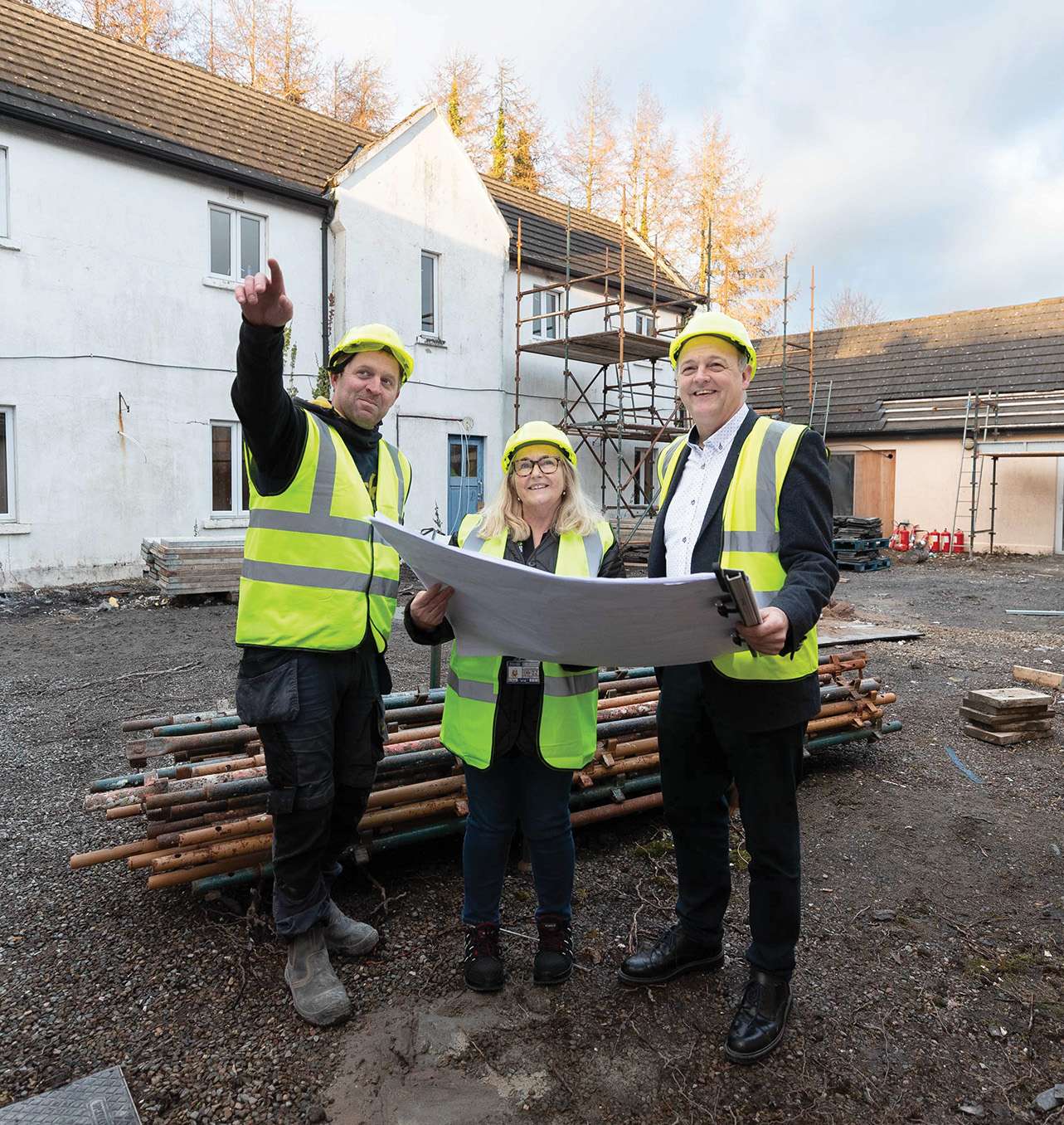
Shannon-based Atlantic Aviation Group is to offer its employees the opportunity of rental accommodation in a purpose-built co-living space, in response to the difficulties its workers have had in finding housing in the region. A subsidiary of AAG has purchased a vacant property for sale in Sixmilebridge in Co Clare and will repurpose it as staff accommodation to give newly hired employees a chance to settle into their new roles without the immediate headache of finding a home. The A-rated development, close to AAG’s centre of operations at Shannon Airport, will consist of approximately 36 en-suite bedrooms for AAG employees with shared relaxation areas and living rooms, communal kitchens and garden areas.
Despite growing its workforce in recent years to more than 750 people, Atlantic Aviation Group has experienced significant challenges in recruiting staff due to the lack of available accommodation in the greater Shannon area. The company, owned by entrepreneur Patrick Jordan, believes the Sixmilebridge development will alleviate pressure on new hires to find housing in the short and medium term.
Commenting on the company’s plans to help employees find housing, AAG owner and chairman Patrick Jordan, said: “Like all employers, I and the AAG leadership team have observed and shared the journey that our people take to find suitable housing and accommodation. In the current market, that has proved to be a somewhat frustrating experience, with a scarcity of accommodation and high rent levels.
“In providing rental accommodation for our new hires who need somewhere to live, we are giving our people the best possible chance to settle into their new roles right away and familiarise themselves with more long-term housing options. We are excited to be able to make this positive contribution and assist with accommodation.”
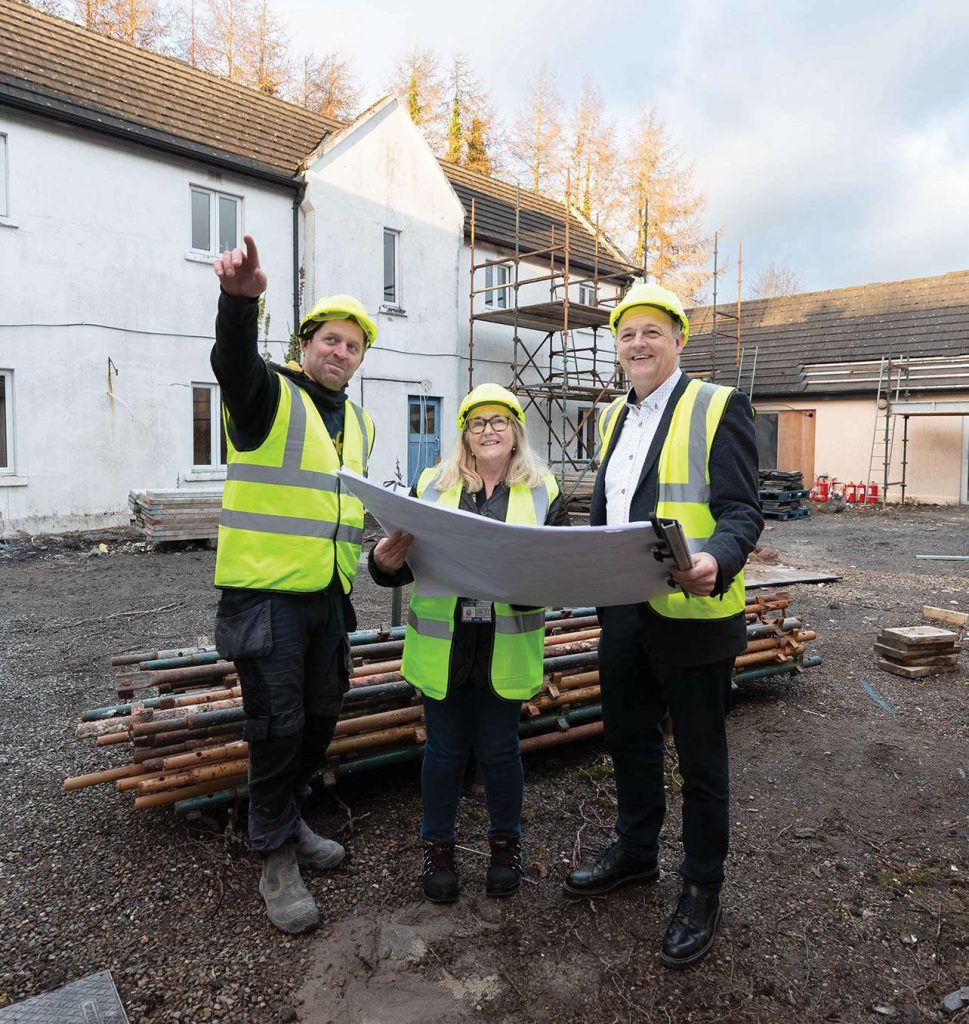
The staff accommodation project, at the site of the former Jamaica Inn hostel, is being designed by O’Neill O’Malley Architecture. Limerick-based construction company LyMar Contracts Ltd is the developer. Aitch Sky Holdings, a subsidiary of AAG, is overseeing the project.
Shift to MMC would greatly speed up delivery A concerted initiative by government to promote the development and expansion of Modern Methods of Construction (MMC) is being called for in a new report. Published by TASC, the independent economic and social think-thank and the Chartered Institute of Building (CIOB), the report – ‘Modern Methods of Construction: barriers and benefits for Irish housing’ – says MMC can be used to address bottlenecks in the delivery of new homes and tackle issues of quality and environmental impact in the building industry. Report author, Dr Robert Sweeney, says that expansion of MMC would not just speed up delivery of housing, it would assist on climate change targets and environmental safeguards. “It would result in considerably less waste than conventional construction methods, enable construction to be carried out more quickly and would reduce disruption such as noise and truck traffic in local neighbourhoods,” he says.
Key proposals in the report include:
• Use of social housing construction to drive MMC, which can also improve social housing construction. A stable and steady production system would enable manufacturers to plan, invest in relevant plant and machinery and optimise the use of MMC. This, in turn, would bring down costs and reassure funders and insurers.
• Greater standardisation of local authority designs for social housing, to assist and streamline efficiency of delivery and reduce production costs, to be progressed in conjunction with the LDA.
• Limit one-off housing to promote development within existing villages and towns, many of which have been in decline over the last 30 years, to assist standardised MMC strategies.
• A review of height restrictions on timber-based buildings, utilising international comparative evidence.
Joseph Kilroy, Policy and Public Affairs Manager for CIOB in Ireland, said: “Ireland’s housing crisis is well documented and is being felt by people across the country who are struggling to find quality and affordable places to live. By taking a fresh look at how new houses are built and increasing the use of Modern Methods of Construction (MMC), we can build more homes more quickly and more sustainably without compromising on quality, while reducing disruption for those already living near development sites. This method is already being used successfully in several other countries and it’s time Ireland followed suit.”
Robert Sweeney said: “Ireland has among the highest emissions, per Capita, in the OECD and the EU. An estimated 37% of these carbon emissions come from the built environment. 14% of this is from embodied carbon arising from the production and transport of building materials such as concrete, as well as the maintenance, repair and disposal of buildings and infrastructure. The remaining 23% is from the heating, lighting and cooling of inefficiently designed and constructed buildings.

“Construction time can be reduced by between four to six weeks, enabling a total reduction in project time of up to eight weeks. It could also help ease pressure on labour supply in the sector,” he said. “There are some fire safety concerns with MMC which the government is currently reviewing. MMC would allow a shift away from cement towards materials such as timber and would promote a naturally occurring resource that absorbs CO2 from the atmosphere.
“Development of additional training and skills to truly bring construction industry methods into the 21st century should accompany any initiative to expand the role of MMC, as a key driver in tackling slow delivery of both public and private housing.”
AG recognised as leader in sustainable construction
AG Paving & Building Products has reinforced its position as a market leader in sustainable construction by achieving Platinum status, the highest accolade available, in the 2023 Northern Ireland Environmental Benchmarking Survey, organised by Business in the Community (BITC). Recognising companies that go above and beyond to reduce their environmental impact, the survey benchmarks companies that drive change through integrating sustainable practices into corporate strategies.
The firm, who has recently released their Corporate Social Responsibility Strategy, was one of 125 organisations from a range of sectors in Northern Ireland to participate in the survey. AG was also awarded ‘Most Improved Performer’ at the awards ceremony, recognising its continuous improvement commitment.
AG previously reported a reduction in its Scope 1 & 2 emissions from its baseline of 2019 to 2022 by 53% – despite an increase in production volumes as the company faced unprecedented demand for its products. As well as this, the firm reduced its scope 3 emissions from 2022 by 10% – reinforcing its commitment to a greener future in construction.
AG is continuously working to reduce the environmental impact of both its operations and the end product, which includes a recent investment of £5 million into its operations enabling the firm to modernise its plant, equipment and technology, driving the firm’s sustainability agenda. In addition, the company has recently gained level 3 in the “Take 5” workplace wellbeing accreditation, recognition for its longstanding commitment to improving both physical and psychological safety.
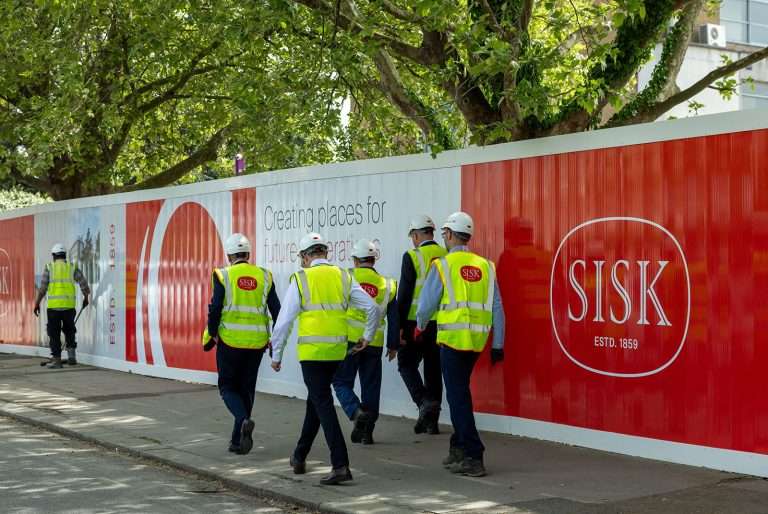
Sisk moves the sustainability dial
Ahead of its annual Supply Chain Awards, Sisk carried out research with its suppliers, sub-contractors and manufacturers that indicates an upward trend in sustainability awareness and engagement in the construction sector. 59% of its suppliers have a net-zero and carbon reduction plan compared with just 52% in 2022. Sisk is also perceived as being further advanced in its approach to eliminating carbon emissions across its business compared with other construction companies (2023: 51%) V (2022: 45%).
Over 60% of the Sisk supply chain are aware of its 2030 Sustainability Roadmap – Building today, Caring for tomorrow – compared with 54% in 2022. Furthermore, 55% believe that Sisk is performing better in sustainability in comparison to other contractors.
As part of its 2030 sustainability roadmap, Sisk submitted its greenhouse gas emission reduction targets to the Science Based Targets initiative (SBTi). The SBTi drives ambitious climate action in the private sector by enabling organisations to set science-based emissions reduction targets. The SBTi’s Target Validation Team has classified Sisk’s scope 1 and 2 target ambition and has determined that it is in line with a 1.5°C trajectory.
Mark McGreevy, Chief Commercial Officer at Sisk, said: “The research conducted by Sisk indicates clearly that our supply chain is very aware about the urgency to reduce carbon emissions. This positive development is crucial to us collectively in tackling the challenges we face as a sector.” He added: “Our Supply Chain Awards help us to advocate for innovation and sustainability, using Modern Methods of Construction, offsite fabrication and transforming our digital capabilities. The Awards give us the opportunity to recognise and appreciate excellence across our entire supply chain. On behalf of Sisk, I would like to congratulate all of our winners.”
_____________________________________________________
Michael McDonnell Managing Editor of Irish Construction Industry Magazine & Plan Magazine
Email: michael@irishconstruction.com WWW.MCDMEDIA.IE