NEW OPPORTUNITIES – PROPERTY MARKET
Ireland’s property market is poised for renewed growth in 2026 as capital returns and living sector take centre stage
Ireland’s commercial property market is entering a more structured and positive phase in 2026, with improving fundamentals, returning investor confidence and renewed activity across key sectors. That’s according to The View 2026, JLL Ireland’s annual market outlook.
Following a prolonged period of volatility and repricing, JLL’s latest research points to a stabilising environment underpinned by lower and more predictable interest rates, easing trade uncertainty and sustained economic growth. Together, these factors are expected to support increased transaction activity and clearer pricing through the year ahead.
JLL forecasts total real estate investment volumes in Ireland of between €3.5 billion and €4.0 billion in 2026, up from approximately €2.44 billion in 2025, as more assets come to market and deferred transactions complete. John Moran, CEO of JLL Ireland, said: “As we enter 2026, there is a growing sense that the market is moving into a more structured phase after a prolonged recovery cycle. Capital is becoming more selective, gravitating towards sectors underpinned by structural demand and long-term fundamentals. As clarity improves, opportunity is beginning to re-emerge.”
Living sector moves into the spotlight
The report identifies the living sector as the defining theme for 2026, driven by Ireland’s acute housing shortage, strong demographic growth and a more constructive policy environment. Living assets – including private rented sector (PRS), student accommodation and alternative residential formats – are expected to move firmly into the core of investor portfolios.
After several subdued years, investment in living assets showed early signs of re-engagement in 2025, with momentum forecast to build through 2026 as regulatory clarity improves and lending conditions ease. JLL expects living to become Ireland’s largest real estate investment category by the end of the decade.
Supply shortages and asset repositioning reshape markets
Across most property types, new supply is expected to remain constrained in 2026, particularly in prime locations. This is likely to support rental growth for best-in-class assets while accelerating the need for retrofit and repositioning of existing buildings. In Dublin’s office market, where over 70% of stock was built before 2010, asset repositioning is becoming increasingly central to value creation. JLL notes that energy-focused upgrades undertaken earlier in a building’s lifecycle can deliver materially higher returns while significantly reducing embodied carbon.
Capital markets shift from reset to re-engagement
Ireland’s capital markets are moving from a period of reset to one of re-engagement, with improving liquidity, greater sector diversification and renewed international interest. Yield stability across major sectors has helped restore pricing confidence, while capital values have begun to stabilise following earlier corrections.
Industrial and logistics assets are expected to see a notable uplift in activity in 2026, with a strong pipeline of transactions already progressing, while retail continues to demonstrate resilience as a stable, income-driven sector.
Navigating a more complex market
JLL cautions that the next phase of the cycle will be defined by greater complexity, with performance
varying significantly by sector, asset quality and location. Traditional market indicators are proving less reliable, making local insight and asset-specific analysis increasingly critical for investors and occupiers alike. “Rather than a broad-based upswing, the coming years will reward informed, disciplined and forward-looking investment decisions,” the report concludes.
Focus on… Offices
Office investment activity remained subdued in 2025 as the sector continued to adjust to post-pandemic occupier behaviour and evolving investor requirements.
Total investment volumes reached approximately €638 million across 31 transactions, representing a modest increase on 2024 levels but remaining well below long-term averages. Activity was spread unevenly throughout the year, reflecting selective capital deployment and ongoing caution among investors.
While demand for prime, best-in-class office assets remains constrained, early 2025 provided the first meaningful insight into pricing expectations at the top end of the market. The transactions at 20 Kildare Street and 10 Hanover Quay marked an important step in re-establishing price discovery for high-quality Dublin offices, offering renewed confidence around where prime values are beginning to settle. The bulk of office investment activity in 2025 was concentrated in smaller and secondary transactions, with French investors playing an increasingly influential role in this segment of the market.
French SCPI funds have shown a particular preference for secondary office buildings with longterm leases, which typically offer higher yields than prime assets and align closely with their income focused investment strategies. For these funds, the appeal of these assets lies in their predictable cash flows, often supported by secure lease profiles and pricing that reflects recent yield decompression rather than long-term fundamentals.
Despite the continued absence of large-scale prime trades, sentiment across the office investment market has improved. The stabilisation of capital values, improving debt availability and increased transactional evidence are contributing to greater pricing clarity.
While a full recovery in office investment activity is expected to be gradual, 2025 marked an important transition year, with the sector moving beyond its trough and laying the foundations for a more active and selective investment environment through 2026 and beyond.
Focus on… Retail
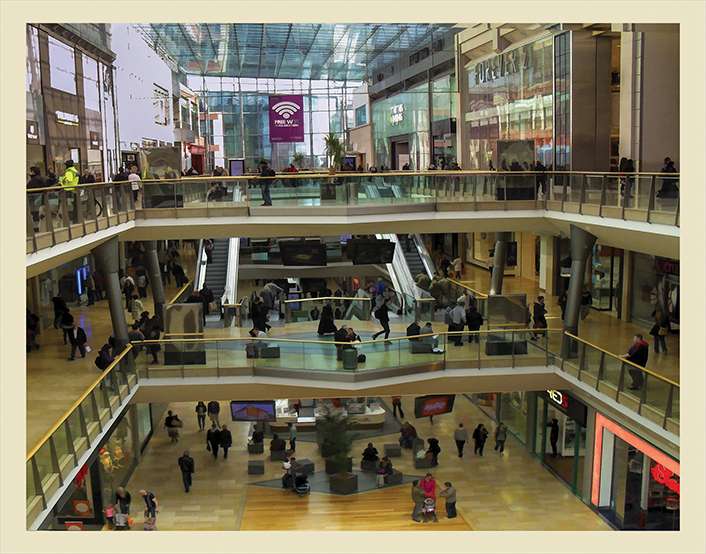
Retail was the most active investment sector in Ireland during 2025, accounting for a third of investment volumes. With €753 million across 38 transactions, the sector’s position as a core asset class remained intact throughout a period larger market uncertainty. While volumes were lower than the exceptional levels recorded in 2024, activity in 2025 was broadly in line with the previous year once the one-off €562 million of Blanchardstown Shopping Centre is excluded, highlighting the sector’s underlying consistency rather than a loss of momentum.
Investor demand remained focused on scale, income security and assets capable of delivering operational upside. Retail parks and shopping centres once again dominated activity, led by several high-profile portfolio and single-asset transactions. These included Realty Income’s acquisition of a nationwide portfolio of prime retail parks for approximately €220 million, followed by the €123.5 million purchase of the Trinity Collection retail parks.
The year also saw renewed confidence in dominant urban shopping centres, most notably the €110 million sale of Jervis Shopping Centre in Dublin city centre, underlining sustained appetite for well-located, high-footfall assets with strong trading fundamentals.
Beyond the headline deals, the retail market demonstrated notable depth across mid-sized and smaller lot sizes. Activity remained strong across convenience retail, high street units and specialist formats, including supermarkets, drive-thru and sale-and-leaseback opportunities. A wide range of domestic and international investors were active in this segment, attracted by long, secure income streams and attractive risk-adjusted returns. This breadth of activity highlights the resilience of Irish retail beyond flagship assets alone.
Focus on… Industrial
Industrial and logistics investment activity in 2025 remained subdued relative to recent peak years, with total volumes of approximately €248 million. This moderation was driven primarily by a lack of suitable stock rather than a deterioration in investor appetite. Interest in the sector remained strong throughout the year, underpinned by robust occupational fundamentals, long-term demand visibility and the defensive characteristics of industrial income streams.
Looking ahead, the investment outlook for 2026 is notably more positive. A number of sizeable transactions are expected to complete in the opening months of the year, with approximately €800 million of industrial and logistics deals currently progressing through the market. As this pipeline transacts, investment volumes are forecast to accelerate materially, with total activity expected to surpass €1 billion by year end.
This anticipated increase reflects the continued depth of investor demand for the sector, supported by stable pricing, yield clarity and the sector’s long-term structural drivers, including e-commerce growth, supply chain reconfiguration and nearshoring. As new product comes to market and liquidity improves, industrial and logistics assets will continue to assert themselves as a core allocation within diversified real estate portfolios through 2026.
The Dublin industrial and logistics market closed 2025 in a position of continued strength, albeit within a more constrained and mature phase of the cycle. While global economic uncertainty, evolving trade policy and geopolitical tensions continued to weigh on occupier decision-making, the underlying fundamentals of the sector remained robust, supported by sustained demand and a persistently tight supply environment.
Take-up in Dublin totalled 2.8m sq ft across 116 deals in 2025, returning to levels more consistent with longterm norms and representing a material improvement on 2024. While volumes remained below the exceptional peaks recorded in 2022 and 2023, this moderation reflects limited stock availability rather than any weakening in underlying occupier demand. Competition for available space remained strong, particularly for smaller/mid-sized units, reinforcing the depth of demand in the market.
Focus on… Living
After a prolonged period of inactivity, Ireland’s living sector began to show early signs of re-engagement in the latter half of 2025. While activity remained well below the levels recorded during the peak years of expansion, investment volumes increased to approximately €602 million across 13 transactions, marking a modest improvement in 2024. When student accommodation is excluded, PRS volumes reached €399.6 million across eight deals, indicating that capital selectively returned to the sector despite continued policy and cost headwinds.
The subdued activity of recent years reflects a combination of structural and cyclical challenges. Elevated interest rates, construction cost inflation, the 2% rent cap and prolonged uncertainty around housing policy have continued to constrain investor appetite, particularly for forward-funded and development-led strategies. However, 2025 represented an important transition year, with clearer signals emerging around the direction of travel for rental policy and a growing acknowledgement at government level that private capital will be critical to addressing Ireland’s housing shortfall.
Transaction activity during the year was concentrated in stabilised, income-producing assets. Notable deals included Ardstone’s acquisitions of Spencer Place (€177 million) and Birchwood Court (€79 million), alongside a number of PRS transactions in Dublin and key suburban locations. The year also saw renewed momentum in the PBSA segment, with transactions such as Project Galaxy (€104 million), Carman’s Hall (€48 million) and Swuite Dublin (€22.5 million), highlighting sustained investor appetite for operational living assets supported by structural demand.
Beyond outright acquisitions, refinancing activity is also a feature of the living market, as owners seek to reposition balance sheets and extend hold periods in anticipation of improved conditions. This reflects a belief that the sector is approaching an inflection point, underpinned by housing shortages, demographic growth and resilient occupier demand.
______________________________________________________________________________________
Michael McDonnell Managing Editor of Irish Construction Industry Magazine & Plan Magazine
Email: michael@irishconstruction.com WWW.MCDMEDIA.IE