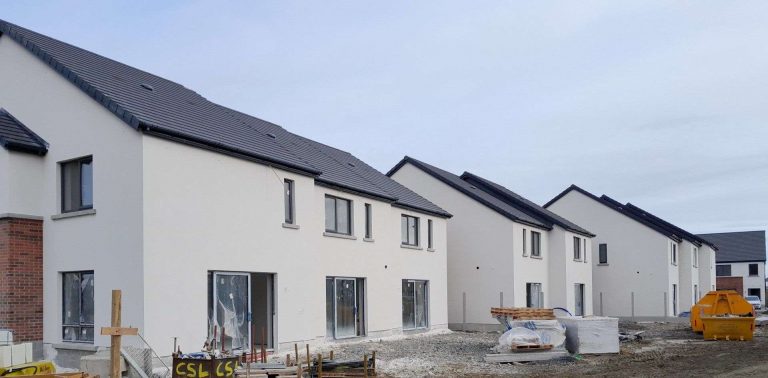
MMC: THE FASTEST ROUTE TO INCREASING HOUSING DELIVERY IN IRELAND
Paul Tierney, Chief Executive Officer at MMC Ireland, talks about what we must address to unlock the potential of MMC
Ireland’s housing crisis is now widely accepted as one of the most urgent and complex challenges facing the country. Despite well-intentioned strategies and increased public investment, delivery continues to lag behind demand. In this context, Modern Methods of Construction (MMC) offers not just speed but the potential to radically transform how we deliver homes, with greater certainty, quality and sustainability. There are multiple reasons why we have found ourselves in a housing crisis and the list is extensive of areas we must address but in my opinion, to unlock the potential that MMC can bring, there are three key priorities we must address.
1. Standardised designs
2. A rules-based planning system
3. A sustainable, buildable pipeline, underpinned by best in class procurement

Standardised Designs: Designed for Manufacture and Assembly
The second iteration of the standardisation of housing typologies has been completed. In October of this year, the Department of Housing, working with Hawkins\Brown Architects, released ‘The Standardised Design Approaches, Promoting Greater Adoption of MMC’. These designs were developed following extensive consultation with industry, including factory visits, technical workshops and feedback from manufacturers, designers and public bodies. The result is a practical, buildable set of designs, compatible with a wide range of MMC technologies including 3D volumetric, 2D light gauge steel and timber, ICF and precast solutions.
What this enables is critical:
• Efficiency: Manufacturers can plan and produce components at scale
• Interoperability: Different manufacturers can deliver the same designs, fostering collaboration and flexibility
• Supply chain integration: Standard designs support a “kit-of-parts” approach that enables interoperability, sequencing and cost certainty across multiple providers.
Standardisation does not mean uniformity. Architectural variety and placemaking is achieved through interchangeable components and adaptable site layouts. This approach removes the inefficiencies of redesigning from scratch for every development. It has significant time and cost savings and allows architects to focus on placemaking and scheme designs and not how far in from the gable wall should the window be.
Rules-Based Planning: Removing the Risk and Creating Certainty
Ireland’s current planning system is complex, inconsistent and often unpredictable. This is not criticism of planners themselves; many do excellent work, but rather of the system and the framework they must work within. I acknowledge the new Planning and Development (Amendment) Act 2025, but the improvements promised remain to be seen. It is, however, certainly a step forward. For MMC to succeed, and I would argue the same point for a significant number of housing schemes, whether they are traditional or MMC, we need a rules-based planning model. The principal being, if a proposed scheme complies with pre-agreed national and local design and planning parameters, it should not be subject to objection or appeal.
This will allow:
• Architects focus on placemaking, not defending every element of housing typologies already agreed nationally
• Developers, contractors and manufacturers to gain certainty on timelines and delivery, reducing cost and improving resource planning
• Local authorities and future residents to know when homes will be delivered, enabling better planning for schools, services and infrastructure.
Imagine a scenario where, the day planning is granted, site works begin because there is no risk of planning being refused. Foundations are being laid while components are simultaneously being fabricated in factories. As soon as the foundations are ready, delivery of either 3D volumetric housing or the component parts of the homes commences. This will cut build programmes in half, doubling the output with existing resources.
This is the power of certainty. It brings speed, stability and confidence into the system and that benefits everyone involved. Whilst this may sound too good to be true and I would be the first to run a mile from a ‘too good to be true’ idea, this is based on fact and has already delivered schemes in both Ireland and abroad.

Procurement & Pipeline: From Pilots to Policy
Of all the enablers of MMC, procurement is the one we hear about most often from our members. Without a sustainable, buildable pipeline especially, no amount of innovation or capacity will make a lasting impact.
At MMC Ireland, we are currently working in collaboration with the CIF, RIAI, SCSI, and Engineers Ireland on a gold-standard MMC procurement policy, due for publication in Q1 2026. One of the central proposals is the creation of regional frameworks made up of certified MMC contractors and manufacturers who have proven they can deliver housing at scale, using the new Government standardised design approaches.
These frameworks will be:
• Performance managed using strict KPIs (financial stability, delivery record, health & safety, quality and sustainability)
Transparent and collaborative, with regular engagement between framework members and local authorities
Flexible, allowing for best-fit allocations based and local partnership development
Public-private collaboration is vital. Local authorities must be empowered and supported to plan, commission and manage schemes in a more proactive, joined-up way, ensuring the pipeline flows, procurement is consistent and delivery remains on programme. The key to success is not just innovation, it’s integration and collaboration.
This is how you build a sustainable MMC ecosystem. It creates confidence in delivery, de-risks investment and makes it viable for companies to plan, hire and build capability. Today, the industry is operating at less than 50% capacity and we are delivering only half the housing output Ireland needs. In my opinion, these two numbers are not a coincidence.
Whilst I have not touched on infrastructure, skills, land and a number of other areas, I have started with these three key topics.
I passionately believe that a nationally aligned approach across these three areas, standardised designs, rules based planning, and collaborative procurement will accelerate delivery almost immediately.
The manufacturing capacity, design innovation and operational know-how are already in place. The willingness across departments and agencies is growing. What we need now is to convert momentum into delivery and do so with urgency, focus and confidence.
If we get this right, MMC can do more than just speed up construction. It can help us redefine how we approach housing in Ireland with greater speed, fairness and long-term sustainability.
Paul Tierney is CEO of MMC Ireland, the national body driving the adoption of Modern Methods of Construction across the country. With over 30 years’ experience in the industry in both Ireland and the UK, Paul brings deep expertise in offsite delivery. Representing over 80 companies, he leads efforts to align industry and Government to scale sustainable, high-quality MMC solutions
_____________________________________________________
Michael McDonnell Managing Editor of Irish Construction Industry Magazine & Plan Magazine
Email: michael@irishconstruction.com WWW.MCDMEDIA.IE