PROMAT – What every subcontractor needs to know about passive fire protection
Over the last 18 months the Department of Housing, Local Government and Heritage has introduced major updates to fire safety and building control regulations. Passive fire protection specialist Promat shares its essential checklist for subcontractors to ensure safe and compliant passive fire protection.
Select tested and certified products to meet compliance requirements
A correctly specified passive fire protection system gives people time to escape a building if a fire breaks out and allows firefighters access to tackle a blaze and help save lives. Selecting the correct system includes identifying the required fire rating and performance needs, assessing structural material compatibility and choosing a system that is tested and certified together. It is vital that passive fire protection is tested to the correct EN standard to demonstrate compliance. Do not mix and match components. With a passive fire protection system from Promat, the highest level of fire safety can be achieved thanks to a wide range of EN-tested, classified and fully certified systems designed to protect buildings, assets and occupants against the threat of fire.
Ensure effective compartmentation from the outset
of a project
Fire and smoke can quickly spread if buildings are not split into fire resistant compartments, However, it is essential that compartmentation is accurately specified and installed. Early engagement with technical specialists in passive fire protection, such as Promat, will ensure any potential issues are flagged at the design stage, and the necessary support made available. Promat compartmentation systems are designed to control the spread of fire throughout a building, including walls, ceilings, floors, roofs, and suspended ceilings. Promat also offers tailored solutions that meet fire safety standards, tested against real-life scenarios. With 60 years of experience in the passive fire protection industry, we’re happy to share our expertise and know-how to help subcontractors meet their legal fire protection requirements.
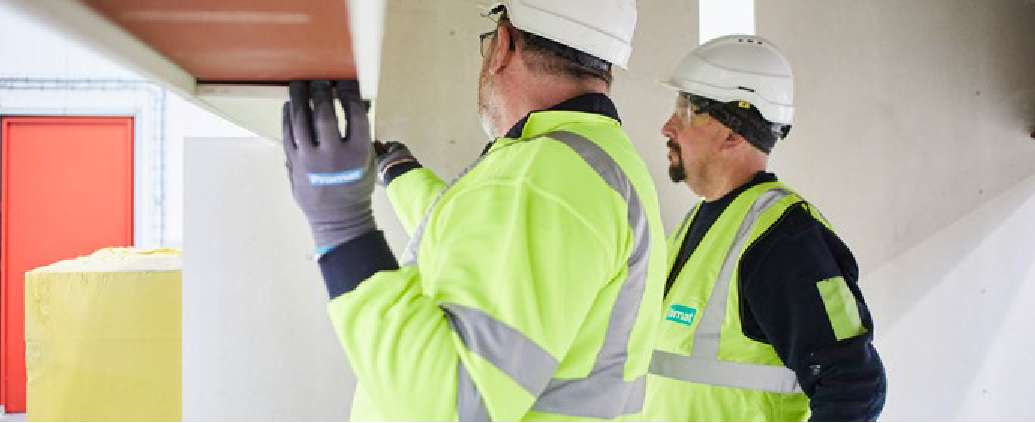
Always follow the manufacturer’s installation instructions to maintain performance
Incorrect or poor installation of passive fire protection systems is probably the most common cause of failure. Some installers can be tempted to get the job done more quickly or more cheaply, but the only way to ensure the system functions and is effective is to ensure it is installed in line with the tested detail – failure to do so risks non-compliance, which could ultimately see the system fail. Even the best systems cannot perform as intended when installed poorly or incorrectly. Beware of systems that have sophisticated assembly instructions, or that require complex and laborious installation, because there is a real possibility they will be installed incorrectly. Part of the value of a passive fire protection system lies in ease of installation and the clarity of instructions. Promat provides detailed project packs to provide guidance through installation including how to tackle common issues. Tap into Promat training to stay up to date with best practice.
Document everything for a smooth sign-off
The Building Control (Amendment) Regulations 2014 (S.I. No.9 of 2014), known as BCAR, require owners, builders, and registered construction professionals to demonstrate through the statutory Building Control Management System (BCMS) website that works are compliant. Under BCAR, the Assigned Certifier coordinates collating certification, inspection records and the submission of appropriate documentation to show compliance upon completion. Promat provides third-party tested passive fire protection systems that meet or exceed the latest EN standards, ensuring safety requirements are met and supporting seamless regulatory approval. Our EN-tested products come with full documentation for compliance needs and are backed by classification reports. This also includes environmental product declarations (EPDs) to demonstrate commitment to sustainability.
Leave nothing to chance
The regulatory changes in Ireland, particularly the latest amendments to Technical Guidance Document B (Fire Safety), increase design, documentation, and compliance responsibilities for anyone involved in building work. To help address the financial pressure contractors are facing in relation to liability and risk, Promat has taken the leading stance to tackle the issue of where responsibility lies in construction projects. Promat has issued a design liability statement setting out our commitment to taking design responsibility for our systems and the scenarios that are covered. There can be no compromise on fire safety. As a manufacturer we fully understand our responsibility to create passive fire protection systems that will perform as expected if a fire breaks out.
To discuss how Promat can support your team get in touch online at promat.com
______________________________________________________________________________________
Michael McDonnell Managing Editor of Irish Construction Industry Magazine & Plan Magazine