PUBLIC TO HAVE SAY ON 3FM PROJECT
Dublin Port has opened public consultation on the 3FM project which when finished, will complete development of the facility
Dublin Port Company has commenced formal public consultation on the 3FM project, the final masterplan project needed to complete the development of Dublin Port and bring it to its ultimate and final capacity by 2040.
Focused on Dublin Port lands on the Poolbeg Peninsula, the project will deliver 20% of the capacity required by 2040. It follows on from the first two masterplan phases focused on the Port lands north of the bay – Alexandra Basin Redevelopment which is nearing completion and MP2 which has recently commenced construction. This period of public consultation will be open until April 28th and follows initial conversations in 2021 with key stakeholders and also a first round of public engagement in November 2021. Feedback from this led to a number of important changes to the initial plans. Since then, Dublin Port Company has been engaged in the preparation of detailed designs and environmental analysis ahead of lodging a planning application in summer 2023. This latest consultation phase will include a number of public information days in Poolbeg, Ringsend and Clontarf where the Dublin Port team can discuss the plans with members of the local communities.
PROJECT HIGHLIGHTS
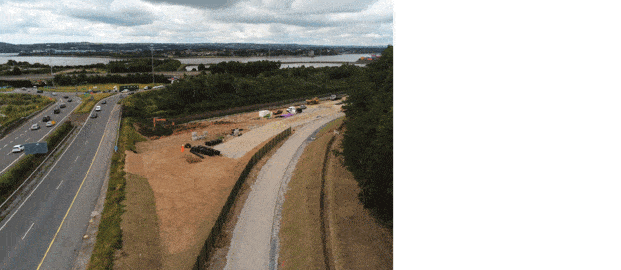
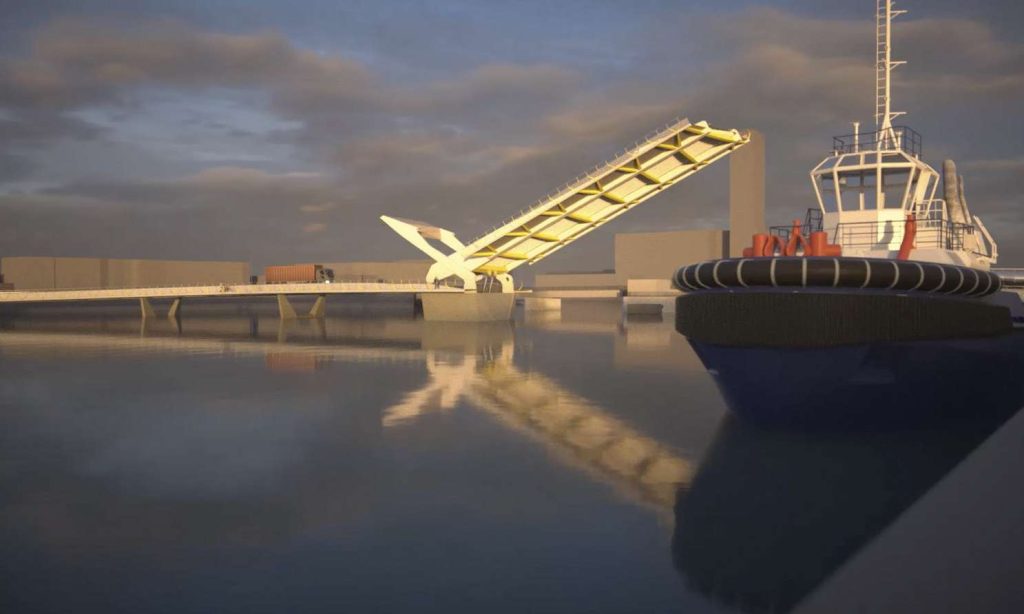
A new 2.2km road called the Southern Port Access Road (SPAR) – this will link the north and south port areas and will include a 190m bridge, with a 45m lifting section to the east of the Tom Clarke Bridge. This will take heavy goods traffic off local roads by providing a dedicated route for port traffic as well as other heavy goods traffic on the Poolbeg Peninsula. The SPAR will have a substantial ‘active travel’ provision comprising cycle and pedestrian ways, as well as capacity for public transport to Poolbeg.
The development of the largest container terminal in Ireland in front of the ESB’s Poolbeg Power Station – this terminal will have 650m of new deeper water berths at the east of the port and comprise a 9.1 hectare area for exports (Area N) at the waterside and a 5.9 hectare yard (Area O) on the southern side of the Poolbeg peninsula for imports. Altogether this terminal will have the capacity to handle 353,000 units (600,000 TEU) annually – more than twice the number of containers handled in all other ports in the country last year.
The relocation of container traffic to the east of the Port – this will allow for the construction of a major new Ro-Ro terminal located just north of the Sean Moore Roundabout. This 12.6 hectare site will take trucks with containers (roll on/roll off) for the increasing volumes of traffic coming directly from Europe post-Brexit. This terminal will add significantly to national strategic Ro-Ro capacity.
A new 325m ship turning circle in front of Pigeon House Harbour – this has been the subject of extensive simulation modelling and will allow safe and efficient turning of 240m long ferries – the largest class of vessels.
A utility area of 1 hectare to accommodate services provided by others – this will include the district heating system to be provided from the Covanta waste to energy plant and other services for the proposed residential developments in Poolbeg.
A new ‘maritime village’ – a modern sailing and rowing campus which will provide enhanced facilities for a range of users including sailing and rowing clubs, sea scouts, the Nautical Trust and local boat owners. The Maritime Village has been developed in consultation with local groups and will replace the current much smaller facilities as well as improving opportunities to view Port activities from the new waterside public plaza area.
Extensive community facilities including a 2.8 hectare Port Park and adjacent landscaped area, with 5G floodlit playing pitches and dog run – this will also see the provision of 5.5 km of active cycle and pedestrian paths throughout the Poolbeg peninsula which when linked to the planned active travel routes on the north side of the river, will provide over 16km of cycle and pedestrian paths.
A VITAL PROJECT FOR IRELAND
Dublin Port is the facilitator of economic growth in Ireland and the masterplan is based on maximising Dublin Port’s capacity up to 2040. Dublin Port Company has previously highlighted that new port facilities will certainly be needed elsewhere on the east coast to cater for increased port demand after that point. Without 3FM, Dublin Port would undoubtedly reach its capacity much earlier – perhaps by 2030, prompting the risk of a national port capacity shortage.
_____________________________________________________
Michael McDonnell Managing Editor of Irish Construction Industry Magazine & Plan Magazine
Email: michael@irishconstruction.com WWW.MCDMEDIA.IE