AIRCRETE CAVITY WALLS: THE SIMPLEST MOVE TO BETTER PERFORMING HOMES
AIRCRETE CAVITY WALLS: THE SIMPLEST MOVE TO BETTER PERFORMING HOMES
With up to 35% of a building’s heat loss occurring through the walls, and 35% potentially lost through thermal bridging, it is essential to ensure your wall construction addresses both issues effectively.
Mannok Aircrete blocks are widely regarded as the best solution to tackling heat loss through thermal bridging as they can reduce heat loss by up to 80% compared to dense concrete blocks. The thermal conductivity of Mannok Aircrete blocks range between 0.12W/mK and 0.19W/mK, depending on strength chosen. To compare, a dense concrete block has a thermal conductivity of 1.33W/mK. Therefore, Aircrete blocks are up to 10 times more insulating than a dense concrete block, making lower U-values easier to achieve.
 Aircrete blocks are commonplace on building sites across the country, most often used in the floor to wall junction to ensure continuity of insulation at this location. This addresses one junction, but if you’re serious about tackling thermal bridging, it is necessary to apply the same solution to all junctions to reduce heat loss. This can result in a patchwork effect of different block types when mixing Aircrete and dense concrete blocks in the wall.
The much more straightforward solution is to simply build the entire inner leaf of the cavity wall with Aircrete blocks. This one switch addresses all thermal bridges almost by default, ensuring up to 80% less heat loss through cold bridges, and improves the wall’s overall thermal performance by improving the U-value. In addition, it makes life much easier for the builder: there’s no mixing different types of blocks, no switching from one to another at different locations, and reduces the risk of errors as a result. Plus, there’s no differential movement which can occur when mixing the block types.
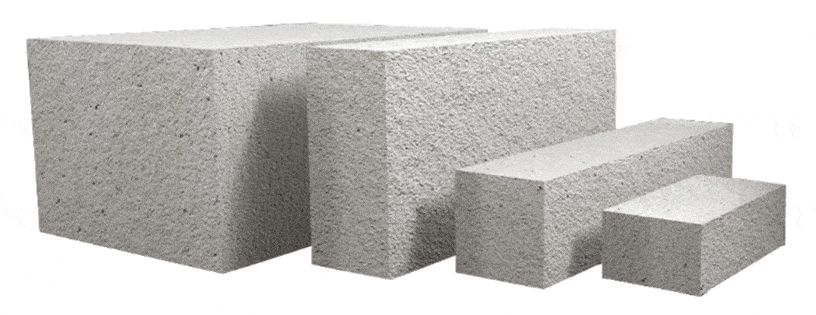
Sustainability is very important in modern homes and as well as offering a high level of energy efficiency, Mannok Aircrete blocks are manufactured from up to 80% recycled materials, using 100% green electricity in production. Aircrete blocks have an A+ Green Guide rating and Mannok Aircrete blocks were one of the very first products in Ireland to have third party verified, Environmental Product Declarations published by the Irish Green Building Council.
Perhaps most important for the homeowner or buyer is the prospect of a more comfortable, energy efficient home with reduced heating bills. Aircrete cavity walls not only insulate the home much better than standard cavity walls, but the blocks also have a faster heating response time. Thanks to their lightweight properties, Aircrete blocks don’t absorb as much heat as heavier blocks from the room, so when the heating is switched on, the home will heat up much quicker, with one study showing that lightweight construction methods can heat a room up to six times faster.
The cost difference will vary by property, but is generally a very small percentage of the overall build, which is offset quickly by the resulting energy savings, and well worth it for the added performance benefits. Looking at a 2,000sq.ft. bungalow as an example, the cost to move from using Aircrete blocks to tackle thermal bridging in all junctions, to building the entire inner leaf with Aircrete blocks, will typically be less than €1000. In many cases the net result can in fact be cost neutral with the support of the Mannok Technical team to advise on specification and provide relevant calculations, making it an appealing option for self-builders and developers alike.